Written by Op. Dr. Ümit Küçüktepe, ENT and Head & Neck Surgery Specialist. Published: . Updated: .
Most people notice it in photos first. The nose looks straight enough in the mirror, but in a picture taken from a slight angle it seems to lean to one side, or the tip points somewhere the bridge doesn't. For some, that's simply a feature they live with. For others, it comes with a blocked nostril, snoring or a constant feeling that one side of the nose isn't working properly.
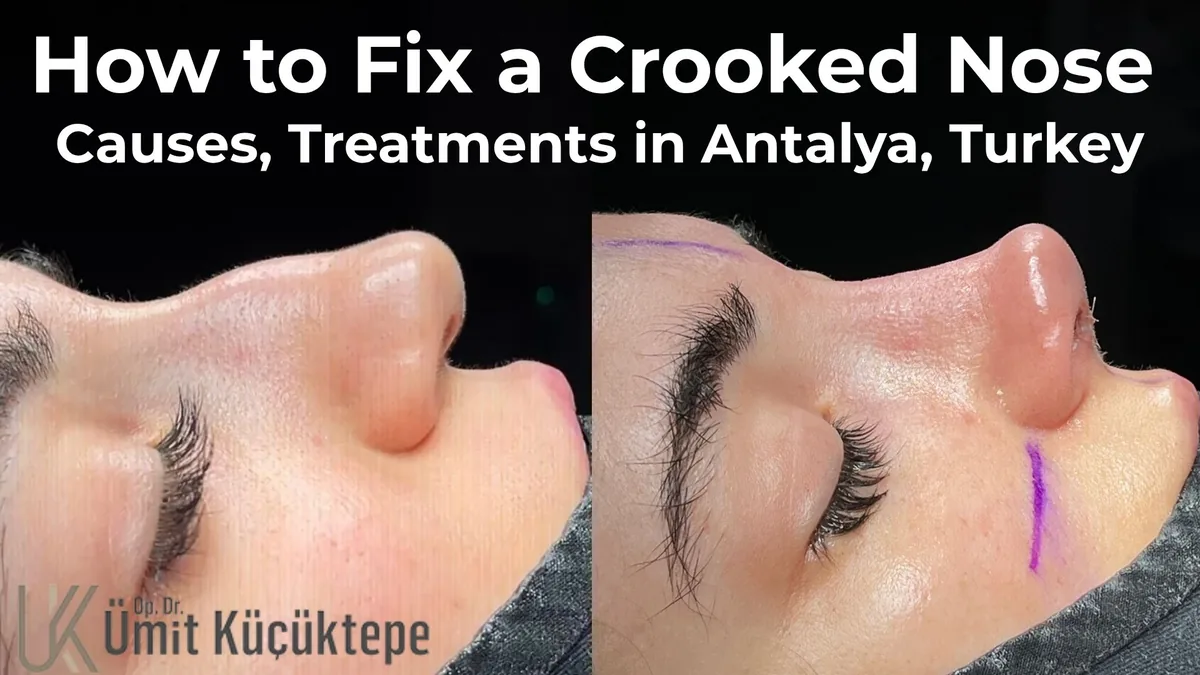
If you're wondering how to fix a crooked nose, the honest answer is that it depends on what's actually crooked. A nose is built from bone, cartilage and a central wall called the septum, and a deviation in any of these looks and behaves differently. This guide explains the common causes, the difference between surgical and non-surgical options, and what crooked nose rhinoplasty in Antalya, Turkey involves, from the first consultation to the final result.
What Is a Crooked Nose?
A crooked nose is one that doesn't sit in a straight vertical line down the centre of the face. Surgeons usually describe the deviation by its shape:
- I-shaped: the whole nose is tilted to one side in a fairly straight line.
- C-shaped: the nose curves, so the middle section bows away from the centre.
- S-shaped: the nose curves in two directions, often with the upper part going one way and the tip going the other.
The deviation may involve the nasal bones at the top, the cartilage in the middle, the tip, or the septum hidden inside. Very often it involves more than one of these, which is why a nose that looks only slightly off from the outside can be quite complex underneath.
It's also worth saying that no face is perfectly symmetrical. A small degree of asymmetry is normal and usually goes unnoticed by other people. A crooked nose becomes a concern when the deviation is visible enough to bother you, or when it affects your breathing.
Crooked Nose Treatment in Antalya, Turkey
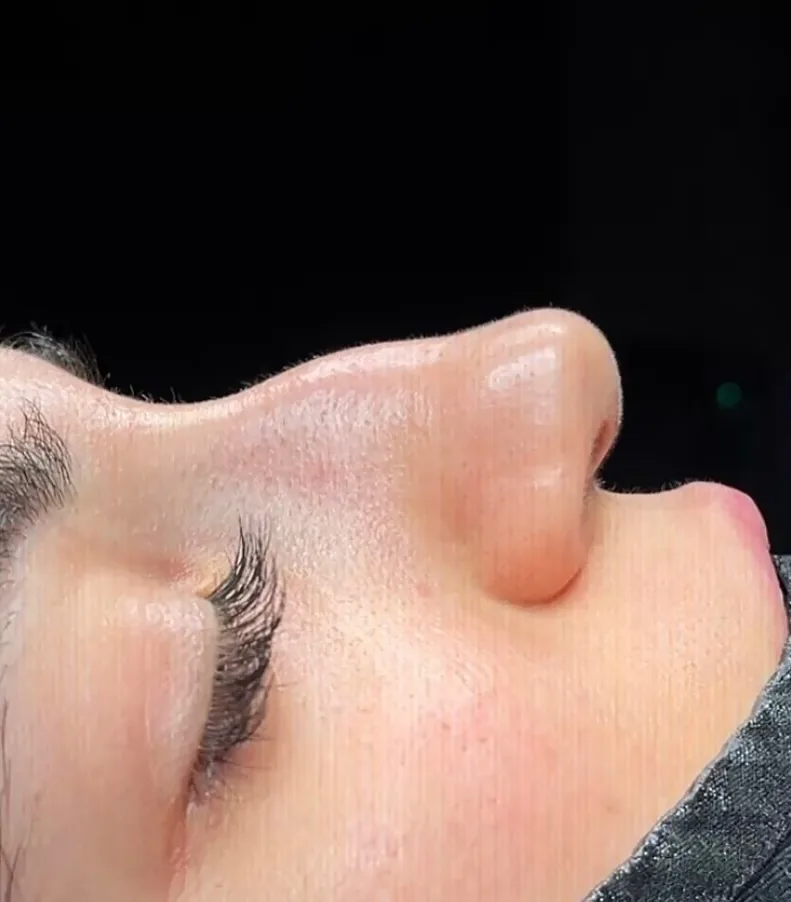
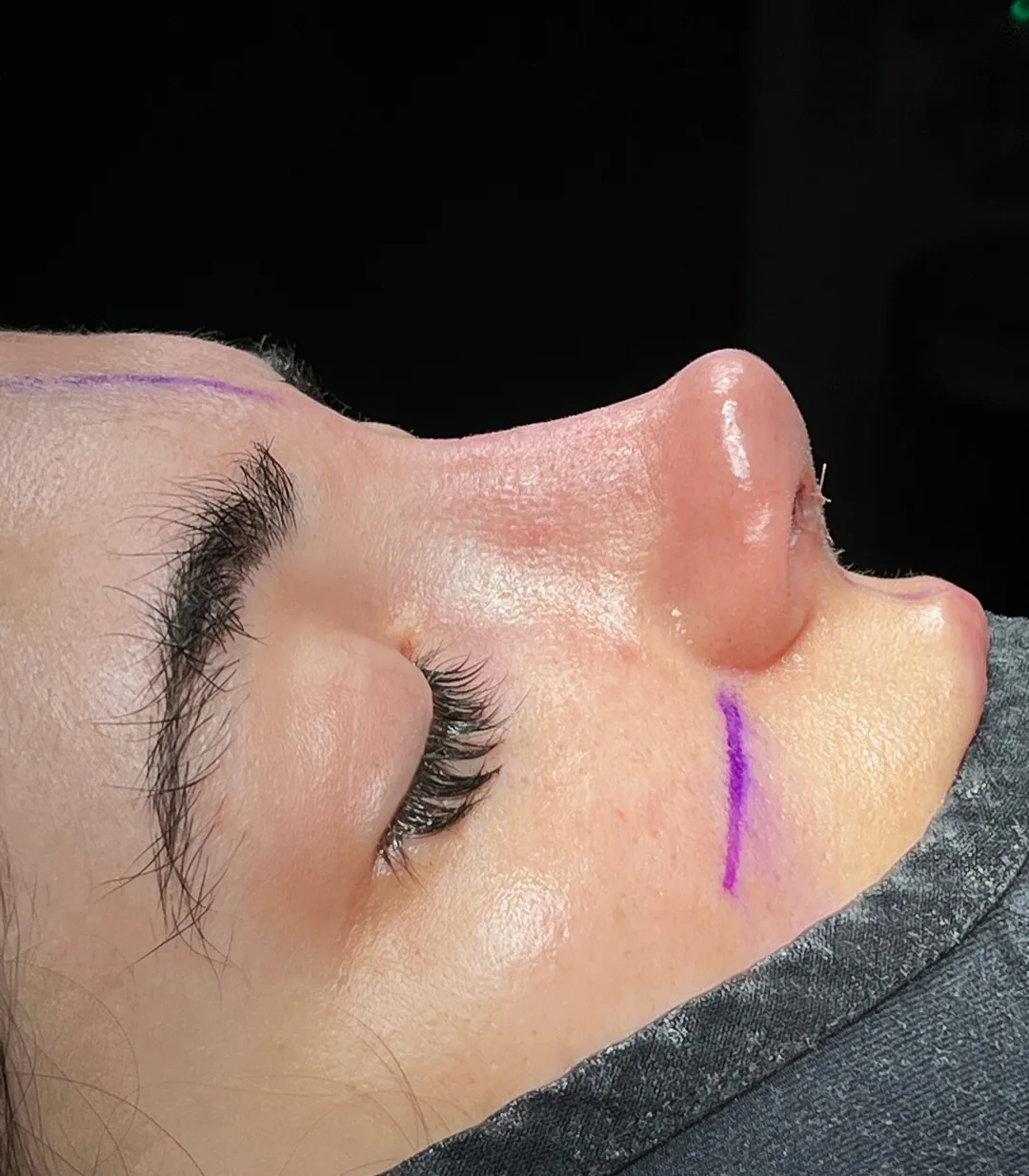
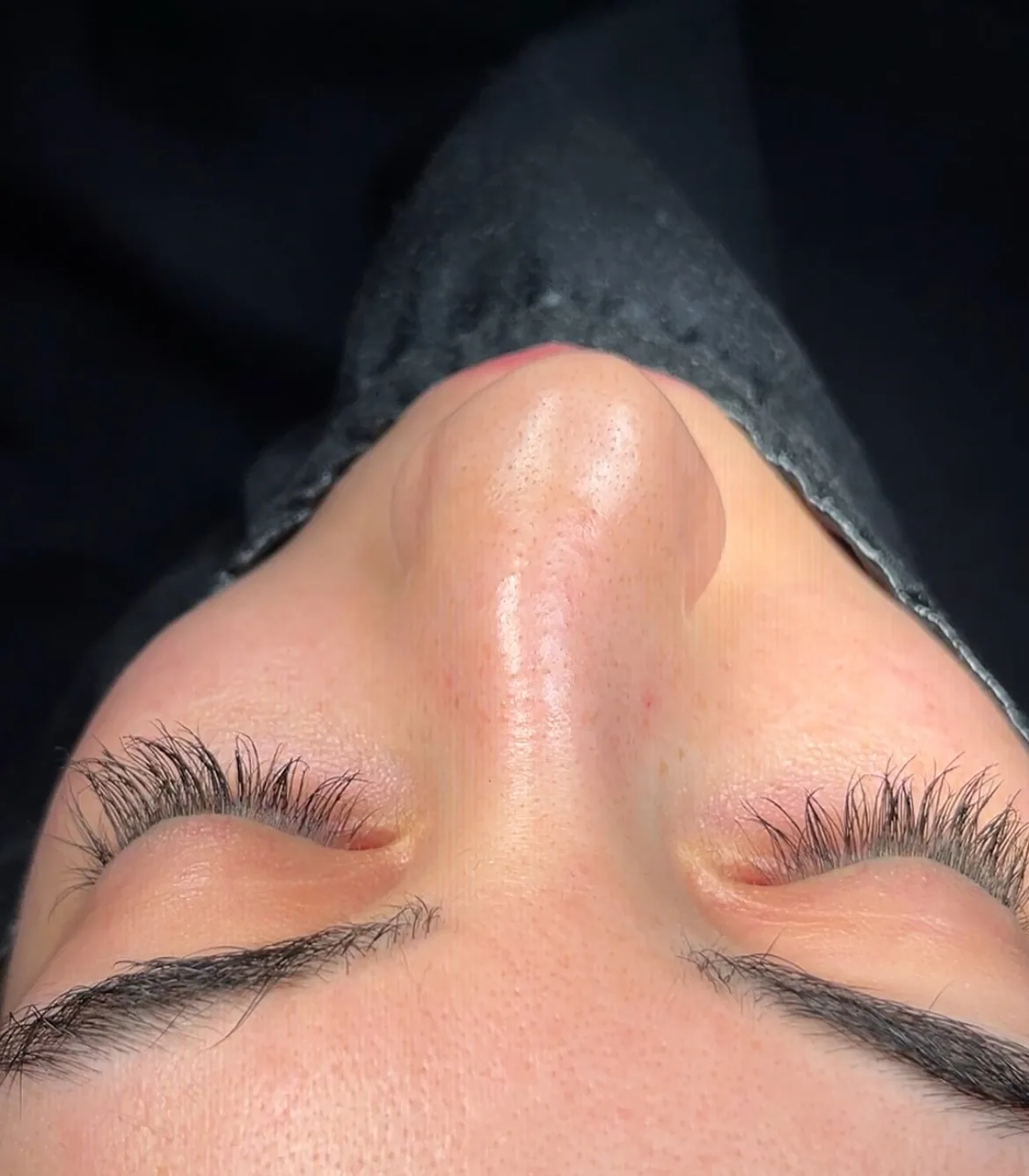
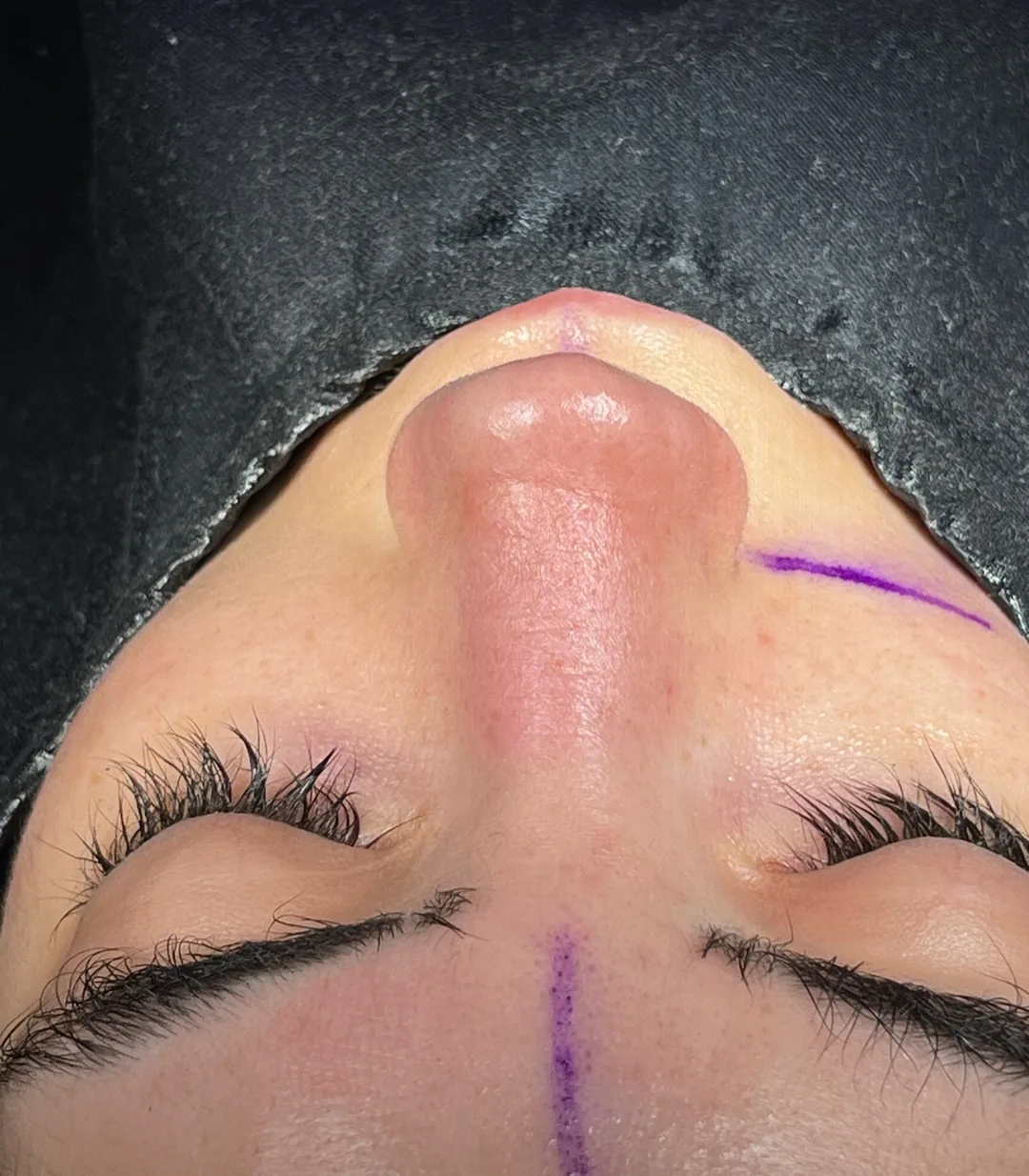
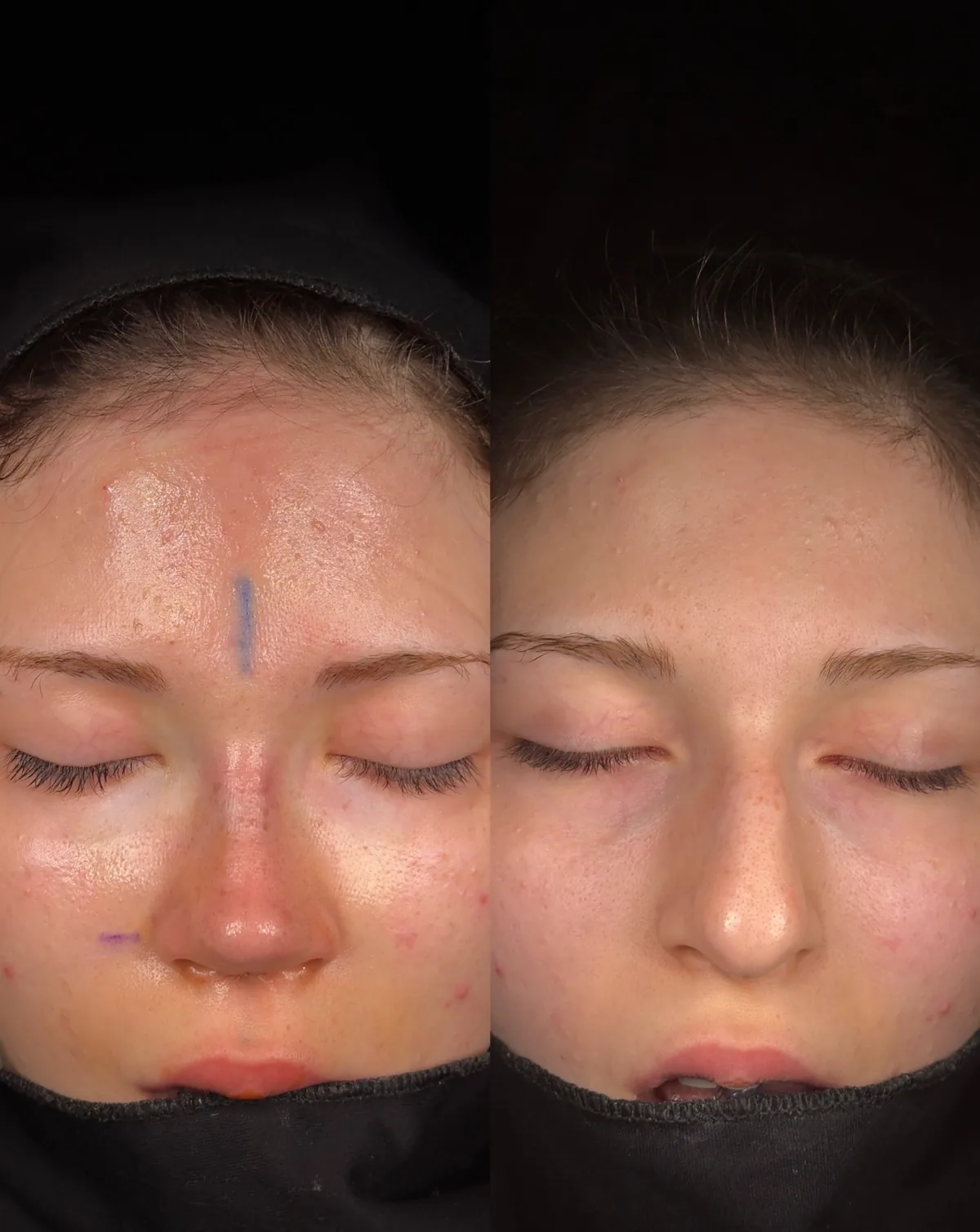
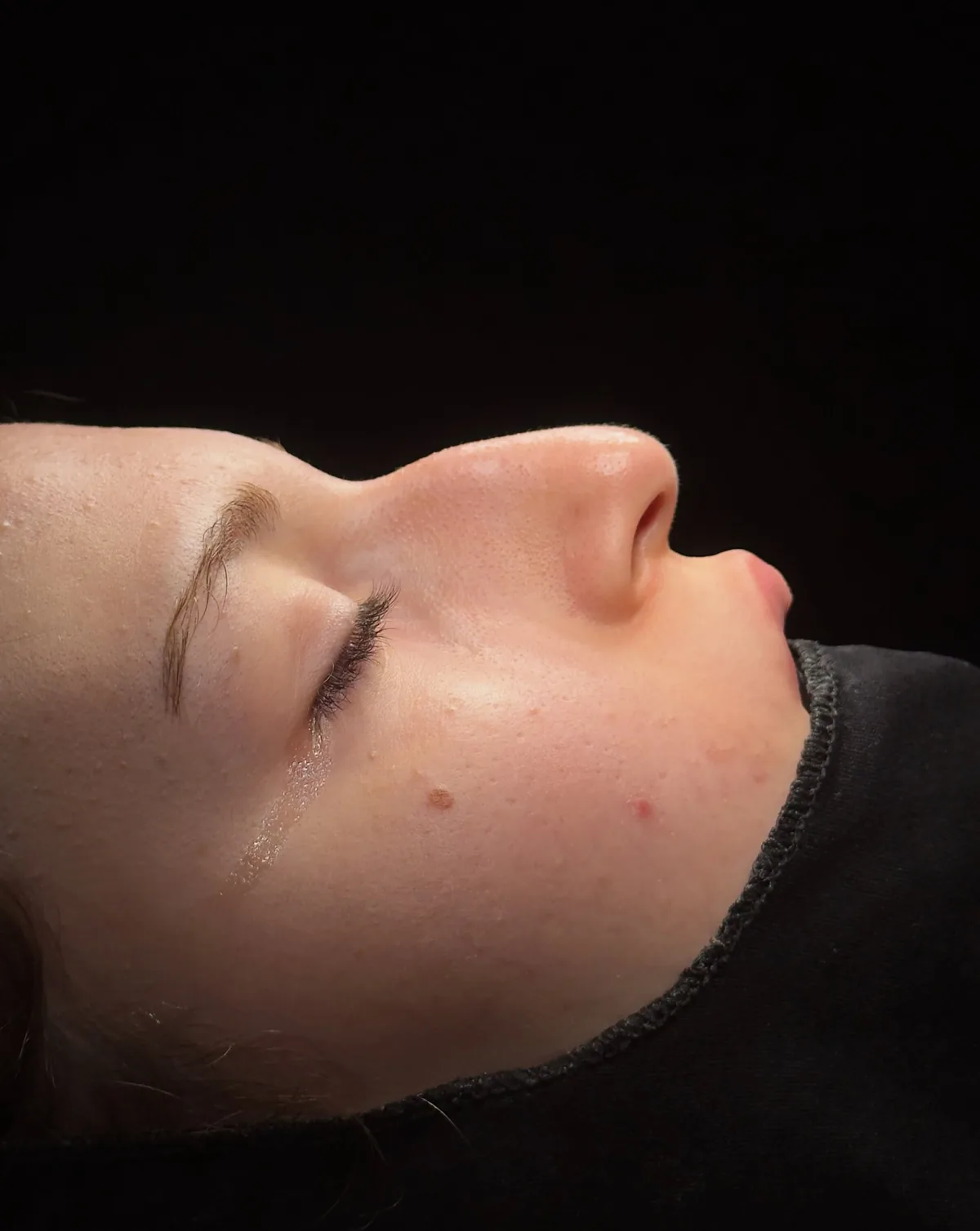
Crooked nose, we used rib cartilage. Precision piezo rhinoplasty.
What Causes a Crooked Nose?
Genetics and Natural Nasal Asymmetry
Some people are simply born with a nose that leans slightly, or develop one as the face grows during childhood and adolescence. The two sides of the face don't always grow at the same rate, and the nose often reflects that. In these cases, there's no injury in the history; the shape has been there for as long as the person can remember.
Nasal Injuries and Trauma
Trauma is one of the most common causes. A fall, a sports injury, a car accident or a blow to the face can shift the nasal bones or buckle the cartilage. Many people don't even remember the original injury, especially if it happened in childhood.
If you've recently had a nasal fracture, timing matters. Seek prompt medical assessment rather than waiting for a particular day. Once swelling allows examination, a specialist may offer closed reduction (manipulation) before the bones set, generally within two to three weeks of injury. Timing depends on the injury and the patient. A healed deformity may need later septorhinoplasty. Do not try to straighten the nose yourself. See the NHS guidance on nasal injury.
Deviated Septum
The septum is the thin wall of cartilage and bone that divides the nose into two airways. When it bends or leans to one side, it's called a deviated septum. A deviation deep inside the nose may cause breathing problems without changing the outer shape at all. But when the front (caudal) part of the septum is deviated, it can push the tip or the lower nose to one side, making the nose visibly crooked. In these cases, deviated septum surgery is usually part of straightening the nose.
Previous Rhinoplasty Surgery
Sometimes a nose becomes crooked after an earlier operation. Cartilage can shift as it heals, the bones may settle unevenly, or an underlying septal deviation may not have been fully corrected the first time. In these cases, the correction is usually done through revision rhinoplasty, which tends to be more demanding because of scar tissue and changes to the original structure.
How to Tell if Your Nose Is Crooked
Common Signs of a Crooked Nose
A crooked nose can be obvious or quite subtle. Common signs include:
- The bridge appears to lean or curve when you look straight into a mirror.
- The tip points slightly to one side.
- One nostril looks larger, narrower or differently shaped than the other.
- One side of the nose looks flatter or more sunken.
- Breathing feels easier through one nostril than the other.
- You snore, breathe through your mouth at night or often feel congested on one side.
A simple way to check is to take a straight-on photo with your face centred and draw an imaginary line from the middle of your forehead, between the eyebrows, down to the centre of your upper lip. A straight nose generally follows that line.
Crooked Nose vs. Deviated Septum: What's the Difference?
These terms are often used as if they mean the same thing, but they don't. A crooked nose describes the outside shape. A deviated septum describes the inside wall.
You can have a deviated septum with a perfectly straight-looking nose, and you can have a crooked nose with a reasonably straight septum, for example when only the nasal bones were shifted by an injury. In many patients, though, the two go together. The relationship between a deviated septum and a crooked nose is one of the main reasons an ENT examination with an endoscope is useful before planning any treatment: what you see on the outside doesn't always tell the full story.
How to Fix a Crooked Nose
Treatment depends on three things: which structures are deviated, how severe the deviation is, and whether breathing is affected. Below, we start with the non-surgical options and then move on to surgery.
Can You Fix a Crooked Nose Without Surgery?
In short, a crooked nose can sometimes be made to look straighter without surgery, but it can't be truly straightened. Bone and cartilage don't change their position through creams, exercises, taping or devices sold online. For selected long-standing contour irregularities, filler may offer a visible cosmetic effect, and even that works by camouflage rather than correction.
The one exception is a fresh fracture. If the nose was broken very recently, the bones can often be manually realigned under local or general anaesthesia without cutting. This is a minor procedure rather than a full rhinoplasty, but it has to be done within a short window after the injury.
Non-Surgical Crooked Nose Correction With Fillers
Fillers, usually hyaluronic acid, can be injected to fill a dip or hollow on one side of the nose. By building up the sunken side, the nose can appear more balanced from the front. This works best for small, specific asymmetries, such as a slight depression along one side of the bridge.
It's important to be clear about what fillers can't do. They don't move bone or cartilage, so the nose is not anatomically straightened. They add volume, so they can't make a large or wide crooked nose look straighter and smaller at the same time. They do not correct a deviated septum and are not a treatment for nasal breathing problems. And the results are temporary, usually lasting several months to around a year.
The nose also carries specific risks with filler. The blood vessels in this area are connected to vessels that supply the skin and, in rare cases, the eye. Accidental injection into or compression of a vessel can cause skin damage and, very rarely, vision loss. For this reason, nose fillers should only be performed by a doctor with detailed knowledge of nasal anatomy, and they're not the right choice for every patient. See the FDA information on filler risks.
Crooked Nose Rhinoplasty
Crooked nose rhinoplasty aims to provide a lasting structural correction by addressing the bones and cartilage responsible for the deviation. Complete symmetry cannot be guaranteed, and some deviation may remain or recur. During surgery, the bones and cartilage that cause the deviation are repositioned, reshaped or supported so the nose sits in the centre of the face. If there are other concerns, such as a hump on the bridge or a wide tip, these can be addressed in the same operation.
For patients seeking rhinoplasty in Antalya, the procedure is planned around the person's own facial features rather than a standard template. The goal is a nose that looks straight and natural, not one that looks "done".
Crooked-Nose Rhinoplasty
A tailored surgical approach combines septoplasty, strategic osteotomies and cartilage grafting to straighten nasal deviation, restore symmetry and improve both breathing and facial harmony. The aim is to improve alignment and airflow while maintaining a natural appearance. The degree of improvement and long-term stability vary with the anatomy, previous surgery and healing; further treatment may sometimes be needed.
Septoplasty for a Deviated Septum
Septoplasty is a functional operation that straightens the septum to improve airflow. It's performed through the nostrils and generally doesn't change the outer shape of the nose. If your nose looks reasonably straight but you struggle to breathe through one side, septoplasty alone may be enough.
Septorhinoplasty for Nasal Shape and Breathing Problems
When the nose is visibly crooked and breathing is also affected, the two problems are usually treated together in a septorhinoplasty. This combines septal correction with reshaping of the outer nose in a single operation. In crooked nose cases, this is often the most logical approach, because the septum is frequently the structure pulling the nose off-centre. Straightening the outside without addressing the septum tends to give results that don't last.
How Does Crooked Nose Rhinoplasty Work?
Straightening the Nasal Bones
If the upper part of the nose leans, the nasal bones need to be moved. This is done with controlled cuts in the bones, called osteotomies, which allow them to be repositioned in the midline. Some surgeons use ultrasonic instruments for this step, an approach known as ultrasonic (piezo) rhinoplasty, which cuts bone precisely while protecting the surrounding soft tissue. The technique is chosen according to the patient's anatomy and the degree of deviation.
Correcting Nasal Cartilage and Septal Deviation
The middle and lower parts of the nose are made of cartilage, and this is where most crooked noses are hardest to fix. Cartilage has a kind of "memory" and tends to spring back towards its original curve. To overcome this, the surgeon may straighten or partially remove the deviated part of the septum, place spreader grafts (thin strips of cartilage) along the bridge to support and straighten the middle section, reposition the septum where it attaches at the base of the nose, and reshape and secure the tip cartilages so the tip points straight ahead.
In severe cases, the septum may be removed, straightened outside the nose and then put back in place. The graft cartilage usually comes from the patient's own septum, though ear or rib cartilage may be needed if there isn't enough, particularly in revision cases.
Open vs. Closed Rhinoplasty for a Crooked Nose
In closed rhinoplasty, all incisions are made inside the nostrils. In open rhinoplasty, a small additional incision is made across the columella, the strip of skin between the nostrils, allowing the skin to be lifted for a direct view of the structures underneath.
For mild deviations, especially those involving mainly the bones, a closed approach may be sufficient. For moderate to severe crooked noses, particularly with significant septal or tip deviation, the open approach often gives the surgeon better visibility and control. Neither method is better in every case. The right choice depends on what needs to be corrected. You can read more about open vs. closed rhinoplasty in our detailed guide.
Can a Crooked Nose Be Fixed Without Breaking the Bone?
Yes, in some cases. If the deviation is mainly in the cartilage, the septum or the tip, the nasal bones may not need to be touched at all. Many crooked noses are actually cartilage problems: the bones are fairly straight, but the middle section or tip leans to one side.
Preservation techniques, which reshape the nose while keeping more of its original structure, may also be used in selected patients. However, if the nasal bones themselves are clearly shifted, they generally need to be repositioned to achieve a straight result. "Breaking the bone" sounds dramatic, but in modern rhinoplasty it means controlled, precise cuts made under anaesthesia, not a forceful fracture.
Who Is a Good Candidate for Crooked Nose Rhinoplasty?
You may be a good candidate if your facial growth is complete (typically around 16 to 17 for girls and 17 to 18 for boys), you're in good general health, and the crookedness bothers you, affects your breathing, or both. It also helps if you don't smoke or are willing to stop before and after surgery, and if you have realistic expectations about what surgery can achieve.
Surgery may need to be postponed if you have an uncontrolled medical condition, an active nasal infection or a very recent nasal injury that hasn't fully healed. Someone with a fresh fracture may be better served by early bone realignment instead. For a broader overview, see our guide on who is a good candidate for rhinoplasty.
What to Expect During Crooked Nose Surgery
Consultation and Preoperative Assessment
The process starts with a detailed consultation. Your surgeon will ask about past injuries, previous operations, breathing problems, allergies and your goals. The nose is examined from the outside and inside, usually with an endoscope to see the septum and the turbinates clearly. Photos are taken from several angles, and in some cases a CT scan is requested to assess the sinuses or bone structure.
For international patients travelling to Antalya, Turkey, the first step is often an online assessment using photos, followed by an in-person examination before surgery.
The Surgical Procedure
Crooked nose surgery is performed under general anaesthesia and usually takes between two and four hours, depending on the complexity. A combined septorhinoplasty or a revision case may take longer. Most patients stay in hospital for one night. At the end of the operation, a splint is placed on the outside of the nose, and soft internal splints or silicone sheets may be placed inside to support the septum.
Aftercare and Follow-Up
You'll be given clear instructions on cleaning the nose, using saline sprays, sleeping with your head elevated and avoiding activities that could put pressure on the nose. The external splint is typically removed around a week after surgery. Follow-up visits monitor healing, alignment and breathing as swelling settles. Before travelling, agree with your surgeon how long to stay locally, when you can fly, which checks are needed before departure and how follow-up and urgent care will be arranged after you return. These plans depend on your procedure and recovery.
Crooked Nose Rhinoplasty Recovery Timeline
The First Week After Surgery
The first few days are usually the most uncomfortable. Most patients describe a feeling of pressure and congestion rather than sharp pain, and this is generally manageable with prescribed medication. Swelling and bruising around the eyes peak around the second or third day and then begin to fade. Breathing through the nose is limited at this stage because of the internal splints and swelling. The splint usually comes off at the end of the first week, and many people return to desk work or light daily activities at this point.
Swelling and Healing During the First Month
By the end of the second week, most visible bruising has gone and you'll look presentable in public. The nose will still be swollen, often more so at the tip, and it may look slightly wider than expected. This is normal. Breathing gradually improves as the internal tissues heal. Strenuous exercise and heavy lifting are commonly restricted for four to six weeks. Contact sports and pressure from glasses may need to be avoided for longer; resume them only when your surgeon clears you.
When Will You See the Final Results?
Most of the swelling settles within three months, and by then the nose will look clearly straighter. The finer details, especially at the tip, take longer. Final results are usually seen between 12 and 18 months, and patients with thicker skin may need the full period for the definition to show. It's important not to judge the result too early, particularly when it comes to small asymmetries that may still be caused by uneven swelling. You can read more about how long swelling lasts after rhinoplasty in our separate guide.
Crooked Nose Rhinoplasty Before and After: What Results Can You Expect?
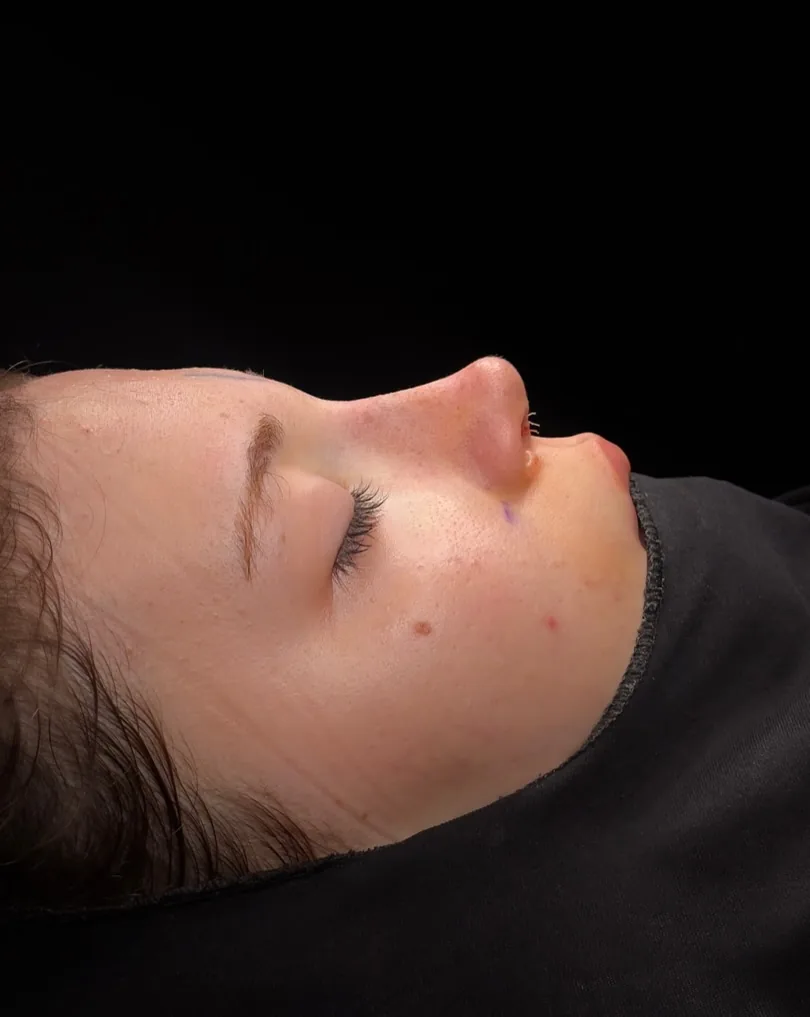
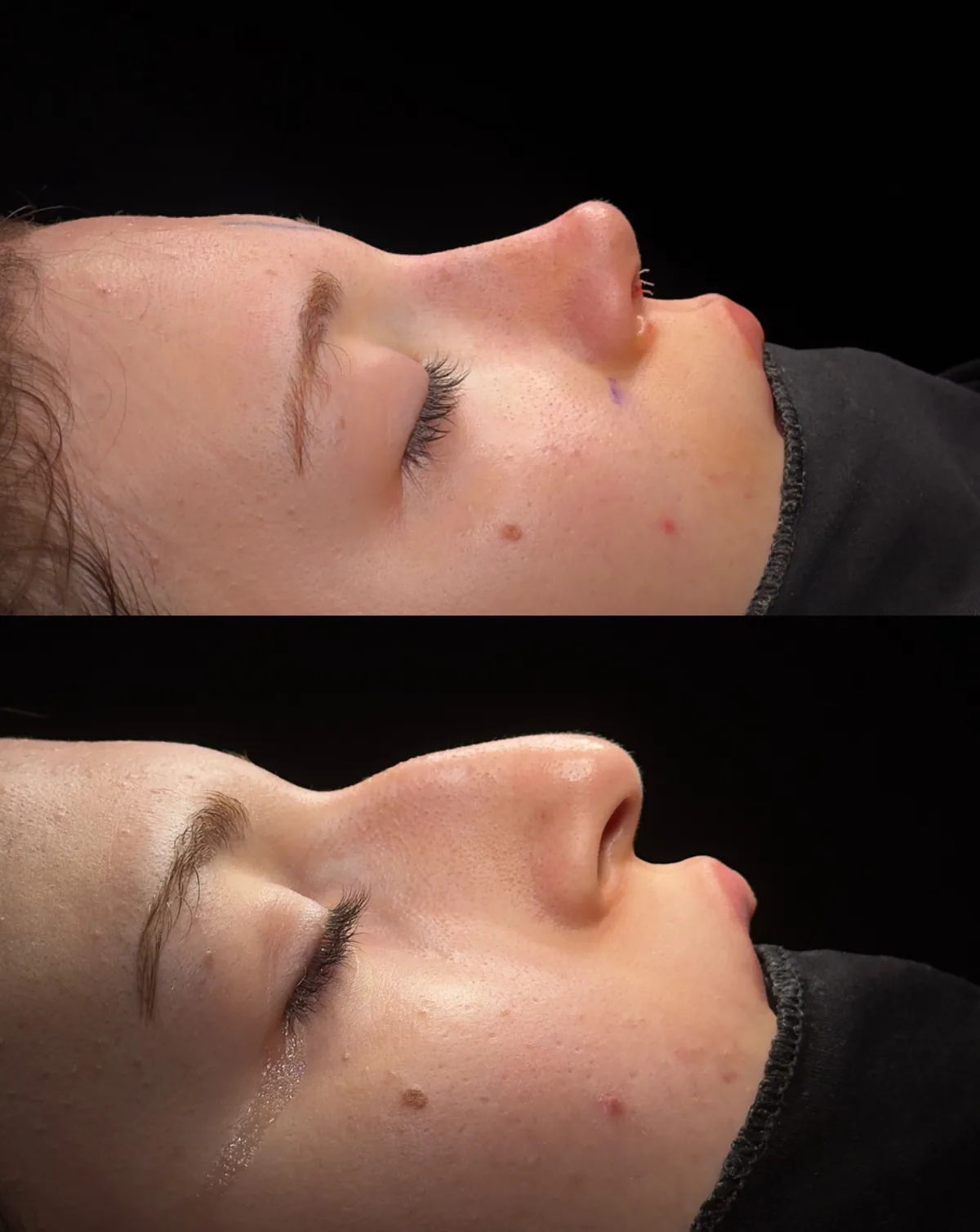
When you look at crooked nose before and after photos, the most noticeable change is usually that the nose now sits in the centre of the face and follows a straight line from the forehead to the lip. Many patients also notice that their face looks more balanced overall, even though the nose itself hasn't been dramatically changed in size.
That said, results depend on the starting point. A mildly deviated nose with healthy cartilage and good skin quality can often be made to look completely straight. A severely twisted nose, one with a long history of trauma or one that has had previous surgery may improve significantly but still show a very slight asymmetry. Thick nasal skin can also hide some of the fine definition. A good surgeon will tell you honestly what is achievable for your nose before surgery, rather than promising perfection.
What Are the Risks of Crooked Nose Surgery?
Like any operation, crooked nose rhinoplasty carries some risks. The likelihood and severity vary with the procedure and your health. Your surgeon should explain your individual risks and how complications would be managed:
- Residual or recurrent deviation, as cartilage may partially return to its old curve, especially in severe cases.
- Small asymmetries between the two sides that remain after swelling settles.
- Breathing problems, usually temporary due to swelling but occasionally lasting.
- Bleeding and infection, which may require medication, urgent assessment or further treatment.
- Septal perforation, a small hole in the septum, which is uncommon.
- Changes in skin sensation around the tip for a few months.
- Risks related to anaesthesia.
- Altered sense of smell, scarring or dissatisfaction with the result; revision surgery may sometimes be considered.
Choosing a surgeon experienced in both the aesthetic and functional sides of nasal surgery helps reduce these risks. Following aftercare instructions carefully, especially avoiding knocks to the nose during healing, is just as important. See the NHS overview of rhinoplasty risks and recovery. For a wider look at rhinoplasty risks, see our dedicated article.
How Much Does Crooked Nose Surgery Cost?
Factors Affecting the Cost of Crooked Nose Rhinoplasty
Crooked nose surgery cost varies from patient to patient because no two noses need exactly the same work. The main factors include the severity of the deviation and whether bones, cartilage or both need to be corrected; whether septal surgery or turbinate reduction is required at the same time; whether cartilage grafts are needed and where they're taken from; whether it's a primary or revision operation; the hospital stay, anaesthesia and follow-up care; and, for international patients, accommodation and transfer arrangements.
When comparing treatment in different countries, consider the full cost of surgery, travel, accommodation, follow-up and any additional treatment rather than the initial quote alone. The most accurate price can only be given after the nose has been assessed. You can find a detailed breakdown of rhinoplasty cost factors in our separate guide.
Does Insurance Cover Crooked Nose Surgery?
It depends on the reason for the surgery and on your policy. Procedures carried out purely to change the appearance of the nose are generally considered cosmetic and aren't covered. When the crooked nose causes documented breathing problems, the functional part of the operation, such as septoplasty, may be covered by some insurers. If you plan to use insurance, check with your provider in advance and ask what documentation they need.
When Should You See a Doctor About a Crooked Nose?
It's worth booking an assessment if your nose has recently been injured and looks different, especially if it's swollen, painful or bleeding. The same applies if you have trouble breathing through one or both nostrils, snore heavily, breathe through your mouth at night, wake up with a dry mouth, or get frequent sinus infections or nosebleeds. And if the crookedness simply affects your confidence, it's reasonable to find out what your options are.
After a nasal injury, see a doctor promptly. Clear fluid running from the nose, a swelling inside the nose that blocks the airway or significant bleeding needs urgent attention. If you're considering crooked nose correction in Antalya, Turkey, Op. Dr. Ümit Küçüktepe can examine both the shape and the function of your nose and explain which treatment fits your situation. To arrange an assessment, contact us. This article has been prepared for information purposes and does not replace an examination.
Clinical photographs illustrate individual cases. Results vary; ask which procedure was performed and how long after surgery each photograph was taken when discussing your own treatment.
Frequently Asked Questions About Crooked Nose Correction
No. Once facial growth is complete, the position of the nasal bones and cartilage doesn't change on its own. A recently broken nose may need prompt realignment, but a long-standing crooked nose won't straighten without treatment.
No. Nose exercises, massage, taping and shaping devices can't move bone or cartilage. Pressing or massaging the nose may cause temporary redness or swelling, but it won't change its structure. After rhinoplasty, never massage the nose unless your surgeon specifically tells you to.
It can be made to look more balanced with filler in selected cases, but the underlying deviation remains. Filler is a temporary cosmetic camouflage, not a structural correction.
Yes, when the deviation involves the septum or narrows one side of the internal airway. Some people have a visibly crooked nose with normal breathing, while others breathe poorly despite a straight-looking nose. An internal examination shows which applies to you.
In adults, there's no good evidence that sleeping position makes a healthy nose crooked. The nasal bones are firm and won't bend from a pillow. The exception is the early healing period after nose surgery, when pressure on the nose should be avoided.
The bones don't usually become more crooked over time, but ageing changes can make a deviation more noticeable. The tip tends to droop slightly and the skin and cartilage lose some support, which can exaggerate an existing asymmetry.
Most patients find it less painful than they expected. The first few days involve pressure, congestion and mild to moderate discomfort, which is usually controlled well with medication. Sharp or severe pain is uncommon.
Yes. Residual or recurrent deviation can occur even after carefully planned surgery, and the likelihood varies with the original deformity and healing. Cartilage can partially drift back towards its original curve, which is why surgeons use grafts and septal correction to stabilise the result. Avoiding injury to the nose during healing also helps.
Most people return to everyday activities within one to two weeks. Strenuous exercise usually resumes after four to six weeks, while the final shape develops over 12 to 18 months.
In many patients, the nose can be made to look straight to the naked eye. In severe deviations, revision cases or noses with very strong cartilage memory, a small degree of asymmetry may remain. The aim is a nose that looks straight and natural in everyday life, and an honest consultation will tell you how close to that your nose can get.
Sources and Further Reading
- NHS: Broken nose - assessment, treatment and warning signs
- NHS: Nose reshaping (rhinoplasty) - risks and recovery
- FDA: Dermal fillers - uses and safety risks
These resources provide general patient information. Treatment decisions require an individual examination.