
You take a deep breath through your nose before a run, and your nostrils seem to suck shut. Or you lie in bed at night, one side blocked, wondering why sprays and allergy tablets never quite fix it.
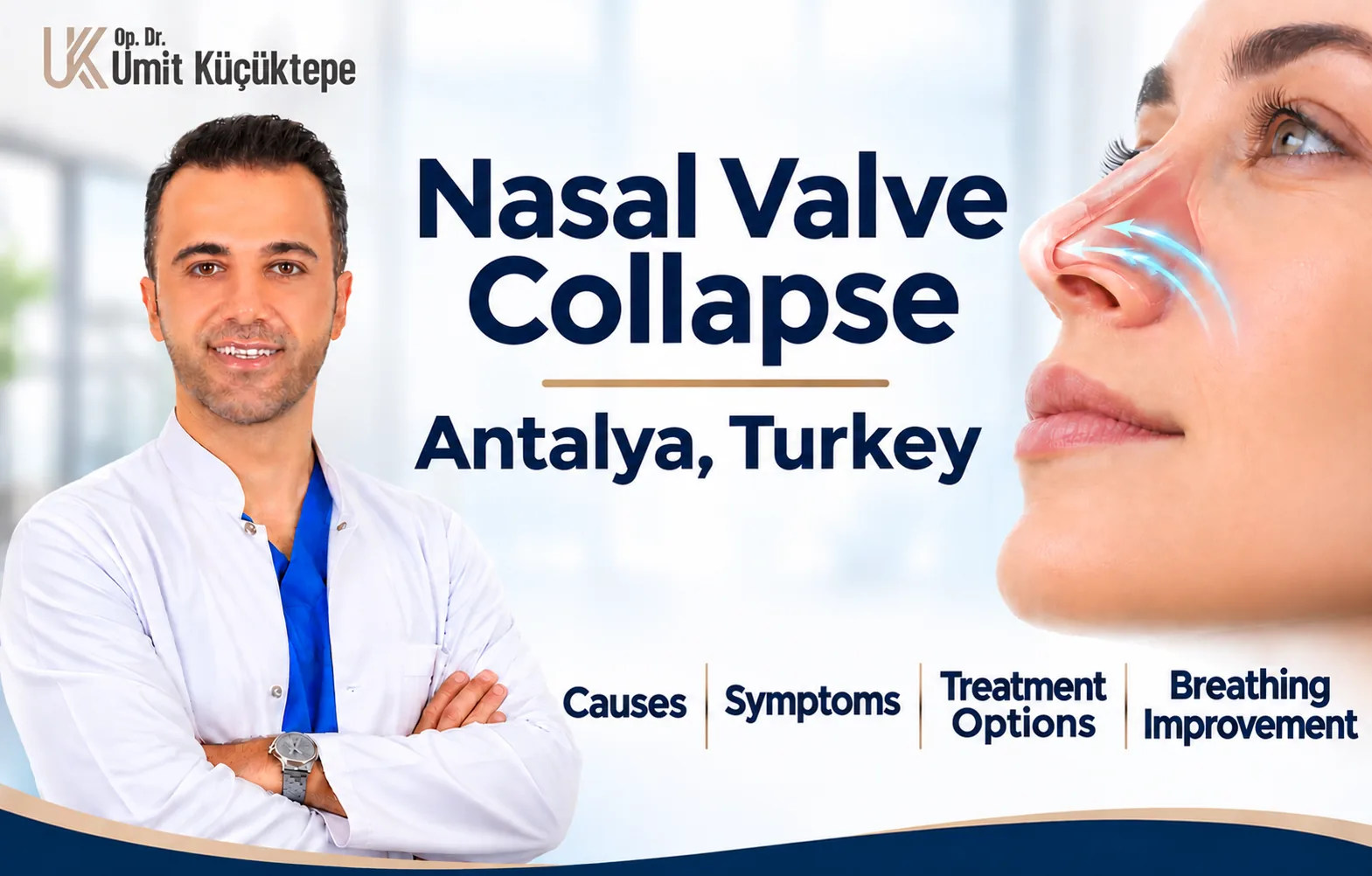
If that sounds familiar, the problem may not be your septum or a cold that won't go away. It may be your nasal valve.
In short: nasal valve collapse is when the sides of your nose, usually the nostril wings, get pulled inwards as you breathe in and narrow your airway. It happens when the supporting cartilage is too thin or weak to resist the suction of your breath. It can be something you're born with, or it can develop with age, after an injury or after rhinoplasty. Nasal strips give temporary relief, while longer-term treatment is tailored to the cause and may include cartilage grafts or other procedures to support the nasal valve.
What Is the Nasal Valve?
The nasal valve is the narrowest part of your nasal airway. Because it's so narrow, even a small change here can make a big difference to how well you breathe.
There are two parts:
- The external nasal valve is the nostril and the nostril wing (the "ala"). When people talk about a collapsed nostril or alar collapse, this is usually what they mean.
- The internal nasal valve sits just under the bridge of the nose, in the narrow angle between the septum and the upper side cartilages. If this angle narrows, breathing can become harder even when nothing looks collapsed from the outside.
Normally, the nostril cartilages are firm enough to stay open when you breathe in. When they're thin, weak or sitting in the wrong position, the wing gets pulled inwards and the nostril closes as you inhale. Gentle breathing may feel fine. The deeper you breathe, the worse it gets.
Symptoms of Nasal Valve Collapse
The main sign is a blocked feeling that gets worse when you breathe in harder. Many people notice:
- Nostrils visibly pulling inwards in the mirror when they take a deep breath
- A blocked nose during walking, running or sport that forces them to breathe through the mouth
- Blockage that barely responds to nasal sprays
- Mouth breathing, snoring and a dry mouth in the morning
- Narrow, slit-like or uneven nostrils
- Breathing that feels much easier with a nasal strip on
Here's a simple check you can try at home. On the blocked side, gently pull your cheek outwards with a finger and breathe in. If it's noticeably easier, the problem may be in the valve area. Doctors call this the Cottle manoeuvre. It isn't a diagnosis, though, as the same relief can happen for other reasons. A proper answer comes from an ENT examination, including a look inside the nose with an endoscope.
What Causes Nasal Valve Collapse?
Naturally Weak Cartilage
Some people are born with thin, soft nostril cartilage, or cartilage that sits at a steeper angle than usual. It's more common in people with narrow, long nostrils and thin nasal skin.
Ageing
With age, the tissues supporting the cartilage loosen, the tip of the nose drops slightly and the nostril wings weaken. Some people who breathed perfectly well when they were younger only notice the problem later in life.
Injury
A knock to the nose can shift or fracture the nostril cartilages so they lose their support. If you're not sure whether you've broken your nose, see our guide to broken nose symptoms and treatment.
Nasal Valve Collapse After Rhinoplasty
If too much cartilage is removed to refine the tip, what's left may be too weak to hold the nostrils open. This usually isn't obvious straight after surgery. It shows up over the following months as the swelling goes down, sometimes with a "pinched" look at the tip. The risk is higher with over-reduced tips, as in some Barbie nose results, which is one reason modern techniques focus on preserving and supporting cartilage.
Swelling is a common cause of blockage in the first few weeks after rhinoplasty, but persistent or worsening obstruction should be assessed by your surgeon. There is no need to wait three months to seek an assessment. The timing of any further procedure is a separate decision and depends on the examination findings and healing.
Facial Paralysis
In facial nerve paralysis, the small muscles that help hold the nostril open stop working. The nostril on the affected side can then be pulled inwards when you breathe in.
A Deviated Septum
A bent septum can narrow the internal valve and make any weakness worse. The two problems often go together. Read more in our guide to deviated septum surgery.
It's worth saying that nasal valve collapse is different from a saddle nose or a collapsed bridge after rhinoplasty. If that's your concern, have a look at What Causes a Nose to Collapse?
Can Nasal Valve Collapse Be Treated Without Surgery?
Because it's a structural problem, medication or exercises won't fix it permanently. Some options can still ease the symptoms:
Nasal strips. These stick across the bridge of the nose and gently pull the nostril wings outwards. They're especially useful for sleep and sport, but they only work while you're wearing them.
Internal nasal dilators. Small silicone devices placed inside the nostrils support the wings from within. Some types of nostril retainer used after rhinoplasty can do the same job.
Treating related problems. If allergies, enlarged turbinates or a deviated septum are adding to the blockage, treating them can reduce how much the collapse affects you. Regular nasal irrigation may help with swelling.
Fillers aren't a reliable or lasting way to support the nostrils, and the tip and nostril area are risky places to inject.
How Is Nasal Valve Surgery Performed?
The aim is to improve airflow by supporting or widening the affected part of the nasal valve. One approach uses small grafts made from your own cartilage, usually taken from the septum. If there isn't enough septal cartilage, or it was used in an earlier operation, cartilage may be taken from the ear or, when needed, a rib. Depending on the anatomy, other options may include suture suspension, implants or radiofrequency treatment. Suitability and availability vary and should be discussed during consultation.
Common techniques include:
- Alar batten grafts. Thin strips of cartilage placed where the nostril collapses, stiffening it from the inside.
- Strengthening or repositioning the nostril cartilage. The cartilage is either reinforced with a graft underneath (a lateral crural strut graft) or moved into a better position.
- Spreader grafts for the internal valve. Thin strips of cartilage placed along either side of the septum, under the bridge, to widen the narrow angle.
These can be done on their own, but they're often combined with septoplasty, turbinate reduction or a septorhinoplasty in the same operation. Anaesthesia depends on the procedure; cartilage graft surgery is often performed under general anaesthetic. Supporting or widening the valve can change the appearance of the nose, including fullness around the nostrils or a wider middle portion. Your surgeon will discuss the likely changes and limitations before treatment.
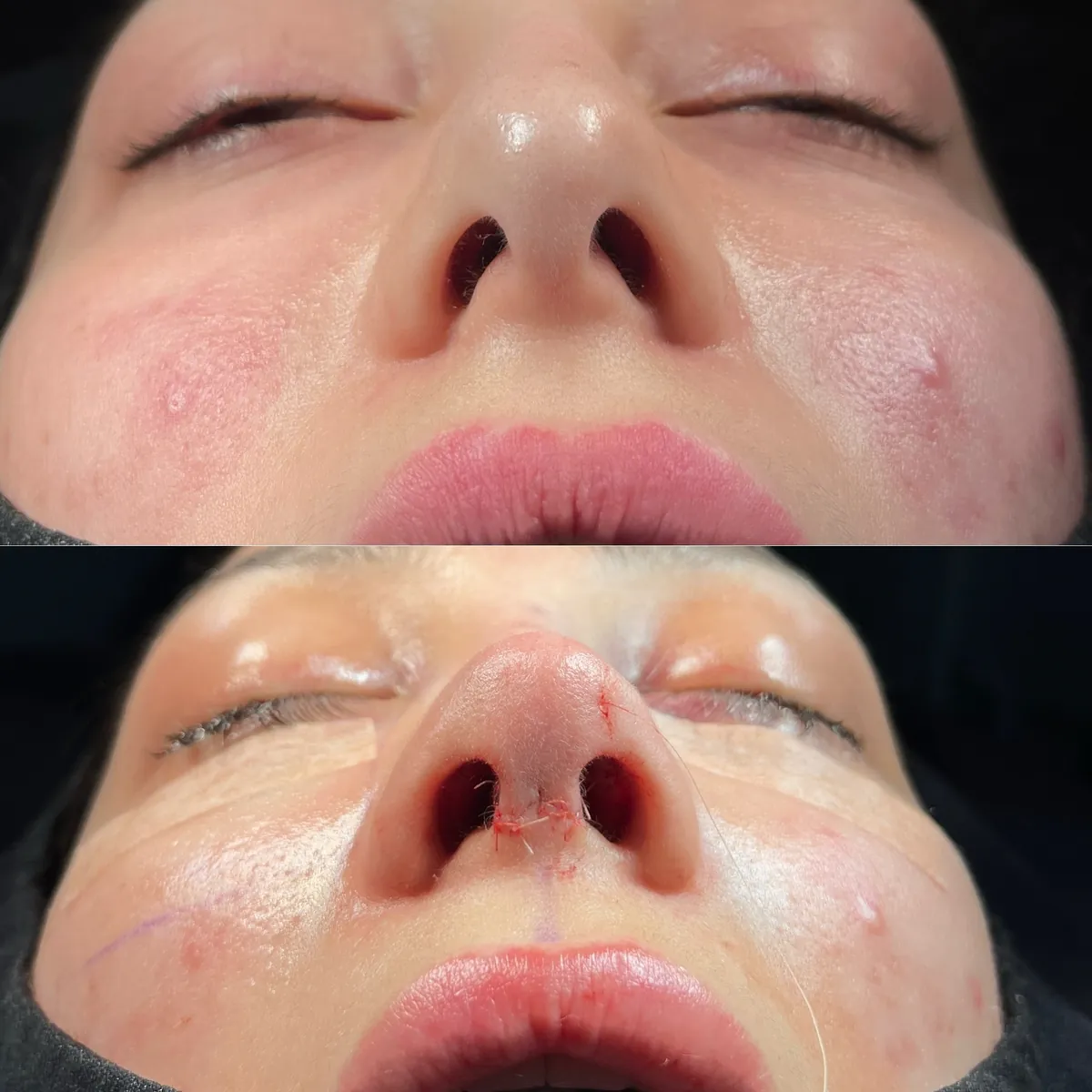
Clinical photographs illustrate an individual case. Swelling changes the appearance in the weeks after surgery, and results vary from person to person.
Recovery After Nasal Valve Surgery
Recovery depends on the procedure and any additional surgery. After cartilage graft surgery, a splint may be needed for about a week, and many people return to light daily activities within 7–10 days, although your surgeon may restrict exercise for longer. Discomfort and pain relief needs vary; follow your surgeon's instructions.
Your nose will feel blocked at first because of swelling inside. Breathing may improve as swelling settles and any internal splints or packing are removed. Some people notice a clearer improvement after 4–6 weeks, while others take longer. Healing and the final result can take several months. You'll find a more detailed timeline in How Long Does It Take to Recover From Rhinoplasty?
If you're travelling to Antalya for surgery, we normally recommend staying around 7–10 days for initial follow-up and removal of any splint. The stay may be longer depending on the operation and your recovery; your surgeon should confirm when you are fit to fly.
Can Collapse After Rhinoplasty Be Fixed?
Yes, but a second operation needs more careful planning than the first. Because cartilage was removed the first time, support usually has to be rebuilt with grafts.
Surgeons generally wait at least 12 months after the first operation before revision, since judging the nose before the swelling has fully settled can be misleading. You can read more in our guides to revision rhinoplasty and How to Fix Breathing Problems After Rhinoplasty.
Frequently Asked Questions About Nasal Valve Collapse
Structural nasal valve collapse usually does not resolve on its own. Swelling-related blockage after rhinoplasty may improve as healing progresses, but persistent or worsening symptoms should be assessed by your surgeon. Assessment does not need to wait three months; the timing of any further treatment depends on the findings and recovery.
Yes, nasal strips work particularly well for this kind of blockage because they pull the nostril wings outwards. The effect only lasts while the strip is on, though, so they don't fix the problem.
It can change the appearance of your nose. Supporting or widening the valve may add fullness around the nostrils or widen the middle portion. The degree of change depends on your anatomy and the technique. Your surgeon will discuss expected changes and whether cosmetic goals can be addressed in the same operation.
Usually from the septum, the wall in the middle of your nose. If that isn't enough or has been used before, it can be taken from behind the ear, and rarely from a rib. Surgeons aim to preserve the ear's shape, but changes in contour, scarring or asymmetry can occur. The donor site and its risks should be discussed before surgery.
It can make you snore. When the nostrils close during sleep, you start breathing through your mouth and snoring gets worse. It doesn't cause sleep apnoea on its own, but it can make existing snoring or apnoea worse.
With a deviated septum, the blockage doesn't change as you breathe in, and the bend can be seen inside the nose. With valve collapse, blockage gets worse with deeper breaths and the nostril can often be seen pulling inwards. The two often occur together, and an ENT examination is the way to tell them apart.
Improvement is not always immediate. Swelling can keep the nose blocked during the first few weeks, and not every procedure requires splints or packing. Some people notice a clearer improvement after 4–6 weeks, while others take longer. Recovery depends on the procedure and your healing; the final result may take several months.
Nasal Valve Collapse Treatment in Antalya, Turkey with Dr. Ümit Küçüktepe
If your nostrils cave in when you breathe in, or you've lived with a blocked nose that sprays never seem to fix, it's worth getting your nasal valve checked.
Op. Dr. Ümit Küçüktepe is an ENT and head and neck surgeon in Antalya, focusing on rhinoplasty, septoplasty and septorhinoplasty. You can send us front and side photos of your nose, ideally with a short video of you breathing in deeply, along with any previous scans or surgery notes.
We'll give you an initial opinion on what might be going on. The final treatment plan, though, can only be decided after a proper examination in clinic. This article is for information only and doesn't replace a medical consultation.
Reviewed by Op. Dr. Ümit Küçüktepe, ENT and Head & Neck Surgery Specialist. Published: . Updated: .