
The majority of men who enter a cosmetic clinic have been contemplating it for years and have postponed it for just as long. This situation is so common that it is no longer surprising, yet it remains thought-provoking. For behind it lies a silent process of self-reflection that can last months, sometimes years. A discomfort felt with every glance in the mirror, yet never shared with anyone.
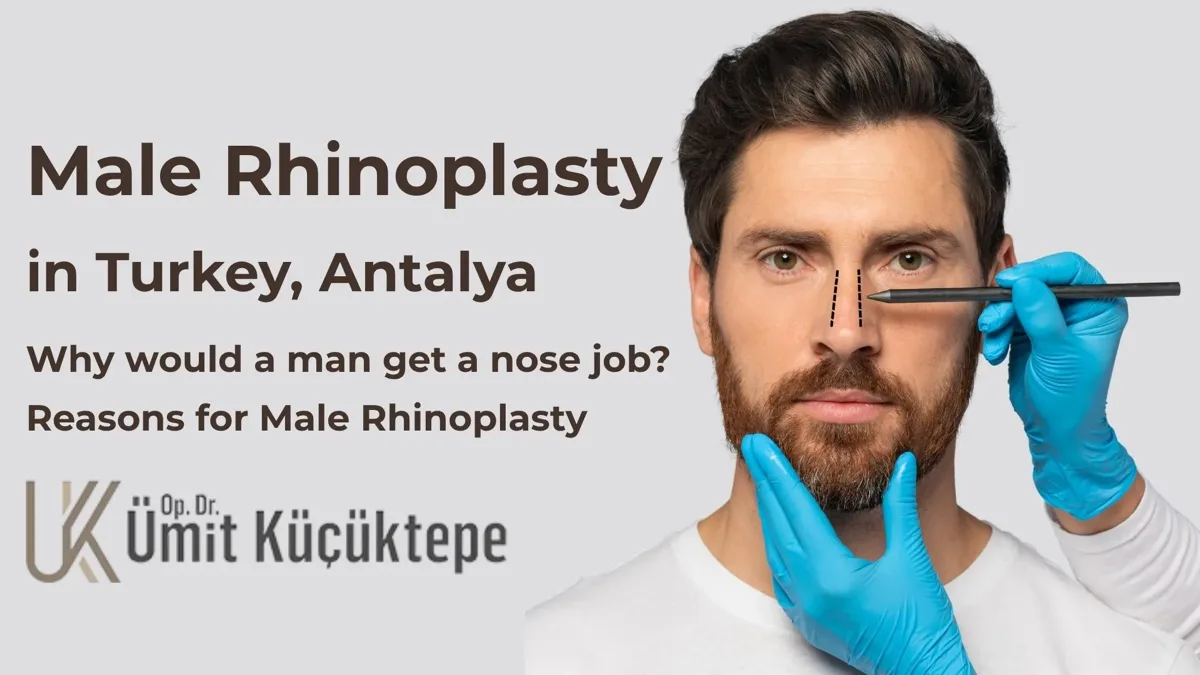
Over the past five years, the number of men undergoing rhinoplasty has almost doubled. However, societal perceptions have not yet caught up with this reality. Male rhinoplasty remains a topic researched in private browser tabs, rarely discussed openly among friends. Yet the men who decide are neither impulsive nor superficial. They are people who have thought long and hard, compared options, questioned their choices, and ultimately chosen to take a step for themselves. It is long past time to break this prejudice.
Why would a man get a nose job?
The reasons why men opt for this procedure are quite varied. A bump on the nose, a change from an old injury or sports accident, problems that make it hard to breathe, and a nose that is not proportionate to the rest of the face are some of the main reasons men choose this surgery. In addition to these, the number of men seeking surgery solely for aesthetic reasons is also increasing, and this is a perfectly legitimate reason.
The difference between male and female rhinoplasty
Male rhinoplasty is not the same as female rhinoplasty. There are significant differences between the two procedures, both in terms of technique and aesthetic approach.
Facial structure differs. A man’s face is broader, more angular, and has harder lines. A small, upturned tip or a slender bridge—often favored in female noses—looks unnatural and unbalanced on a man’s face. The nose must be planned to harmonize with the overall character of the face.
The aim is to achieve a natural appearance. In male rhinoplasty, the objective is not to reduce the size or create a noticeable change. After the operation, no one should be able to tell that a rhinoplasty has been performed. This delicate balance makes male rhinoplasty a more technically demanding procedure.
Skin thickness differs. In men, the skin is generally thicker and oilier. Such thickness makes it difficult to achieve fine details on the nose. The surgical plan must be devised with this difference in mind.
The ideal nasal bridge profile differs in men. While a straight or slightly upturned profile is ideal for women, completely flattening the nose may not suit a man’s face. A slight straightness or minimal slope often yields a result that is far more harmonious with a man’s face.
How to choose the right nose shape for men?
Many male patients arrive with reference photographs they have found during their research. While this approach is a good starting point, it is important to remember that a nose that looks good on someone else’s face may not look the same on yours. Surgical planning must always be tailored to the individual.
That said, there are some general models that stand out in male rhinoplasty.
The natural profile model is the most preferred approach. The aim is a nose with a straight or very slightly sloping bridge, a tip that is neither upturned nor drooping, and an overall appearance that gives the impression of being untouched.
The athletic model is particularly favored among men leading active lifestyles. A strong, balanced nose that is proportionate to the facial features is planned.
The function-focused model, on the other hand, is aimed at patients who prioritize breathing over aesthetics. Procedures such as septum correction and turbinate reduction are used to improve both appearance and breathing.
How to perform male rhinoplasty?
Blood-thinning medication and smoking must be stopped at least two weeks prior to surgery. Discussing expectations during a detailed preoperative consultation with the surgeon has a direct impact on the success of the procedure. Reference photographs make this consultation much more productive.
Swelling and bruising are common in the first week following surgery, and this is entirely normal. Those in desk-based jobs can usually return to social life within 7–10 days. However, it takes approximately one year to see the final results.
Patients who exercise regularly can resume light activities such as gentle walking after 2–3 weeks; for strenuous exercise and contact sports, a waiting period of at least 6 weeks is required.
What is the best nose type for men?
There is no single ideal nose for men; every face is different, and every nose must be planned individually. However, there are certain general principles that are generally followed in male rhinoplasty.
- The bridge of the nose should be straight or very slightly curved.
- The tip of the nose should not be too upturned; an angle that is parallel to the ground or very slightly upturned is more suitable for a man’s face.
- The nostrils should be proportionate to the width of the face and not excessively narrowed.
- When viewed as part of the whole face, the nose should not stand out but rather complement the face.
Natural male rhinoplasty
One of the topics men are most curious about is natural-looking rhinoplasty. In a properly planned male rhinoplasty, the surgery is not noticeable. The aim is not to create a nose that looks as though it has been altered, but rather to make it more harmonious with the face. When this is achieved, people around you will often comment that your face looks better, giving the impression of being more rested or fitter. Hardly anyone notices that the nose has changed.
At what age do men get a rhinoplasty?
It is generally recommended to wait until the age of 17–18 for the bones of the nose and face to have fully developed. As bone development in boys sometimes takes slightly longer to complete than in girls, each patient under the age of 18 is assessed on an individual basis.
There is virtually no upper age limit. There are men who have undergone surgery in their 40s and even 50s. Provided their general health is suitable, age alone does not constitute a barrier.
Male rhinoplasty before and after in Turkey, Antalya


Male Rhinoplasty Cost Comparison: Turkey vs US, UK and Europe
The cost of male rhinoplasty can vary widely, depending on the surgeon’s experience, the standards of the clinic, the complexity of the surgery, the hospital fees, and the country where the procedure is performed. Overall, Turkey still remains one of the most affordable places for high-quality male rhinoplasty surgery.
Factors affecting the price
The final cost depends on:
- Surgeon’s reputation and experience
- Open vs. closed rhinoplasty technique
- Revision or primary surgery
- Functional corrections (septoplasty, breathing issues)
- Clinic quality and technology
- Complexity of nasal anatomy
Male rhinoplasty recovery timeline
- 7–10 days: splint removal
- 2–3 weeks: major swelling decreases
- 3–6 months: nose refines gradually
- 12–18 months: final result becomes visible
Frequently Asked Questions
Depending on the extent of the procedure, it takes between 1.5 and 3 hours.
For desk-based work, 7–10 days is sufficient. This time frame might be a little bit longer if the work entails physical labor.
Note
- Before and after images were taken in the same clinical environment and under the same technical conditions.
- Written and explicit patient consent has been obtained.
- This content is shared for informational purposes only.
- Results may vary from person to person.
Please contact Op. Dr Ümit Küçüktepe for an examination and further information.
This article is intended for informational purposes only. The recommendations of your surgeon, who will examine you and perform nose surgery, should be a priority.