
A child who sleeps with their mouth open, snores at night, and can't breathe through their nose is often written off by parents as just a habit. In reality, the most common cause behind this picture is enlarged adenoids.
The adenoid is normal lymphoid tissue that naturally grows during childhood. The problem isn't the tissue itself, but its growing large enough to block the airway.
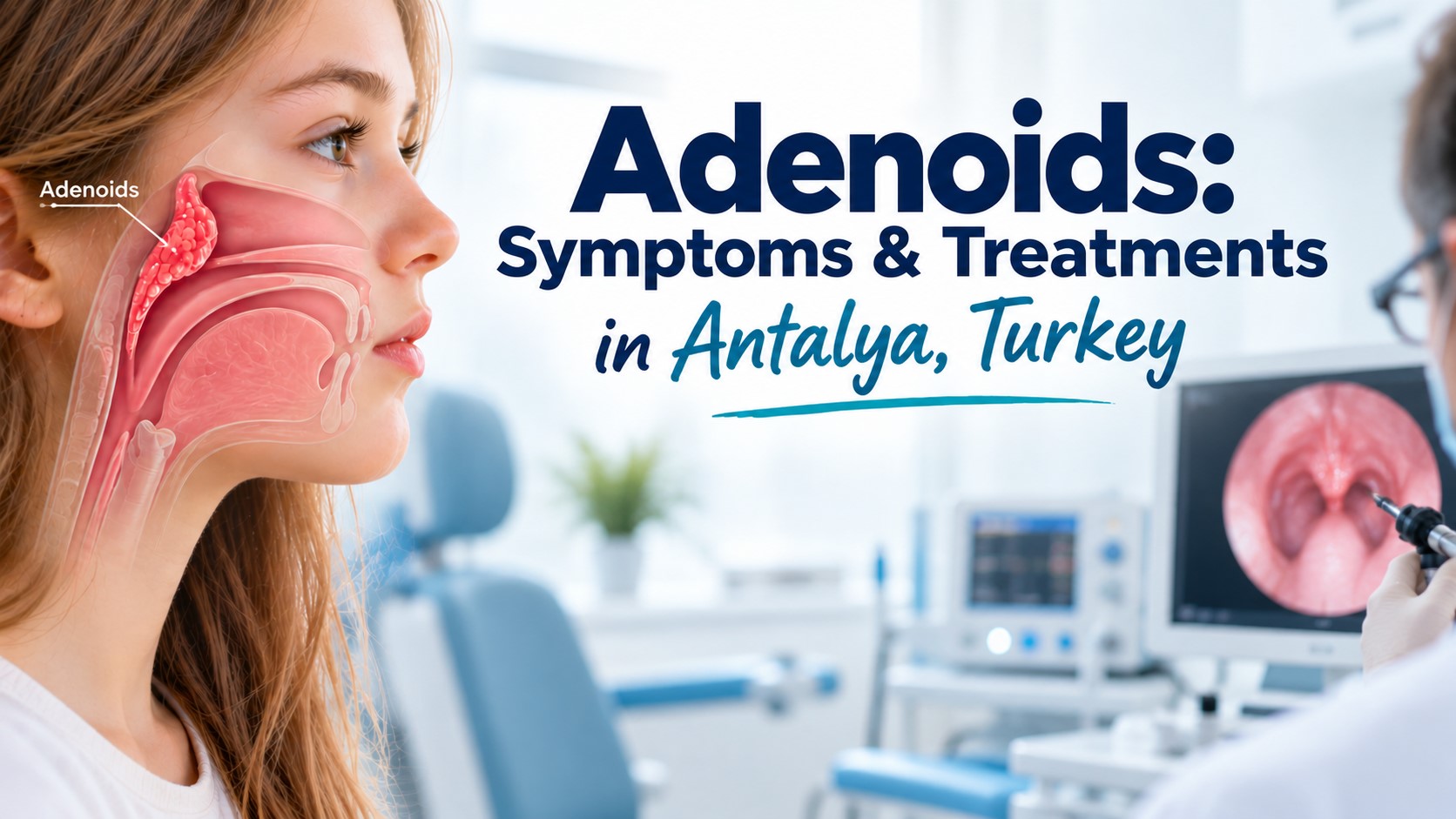
What Are Adenoids?
The adenoid — also called the pharyngeal tonsil — is lymphoid tissue located at the back of the nasal cavity, in the nasopharynx. It is part of the same immune defense system as the tonsils and forms one of the first barriers against germs entering through the airway.
Because of its location, the adenoid cannot be seen simply by looking into the mouth. Its size and whether it is obstructing the nasal airway are usually assessed during an ENT examination.
Why Do Adenoids Enlarge?
The adenoid begins growing after birth, typically reaches its largest size between ages 3 and 7, and shrinks again during adolescence. This is a normal developmental process, not a disease.
Several factors can turn this normal growth into a problem:
- Frequent upper respiratory infections: Repeated infections can cause ongoing stimulation and inflammation of the tissue.
- Allergic conditions: Allergic rhinitis can contribute to the enlargement of both the adenoid and the turbinate tissue.
- Daycare and school environments: Infection frequency rises in crowded settings.
- Exposure to cigarette smoke: Secondhand smoke irritates airway tissues.
- Reflux: Reflux has also been associated with irritation and inflammation of tissues in the upper airway.
What Are the Symptoms of Enlarged Adenoids?
Symptoms in Children
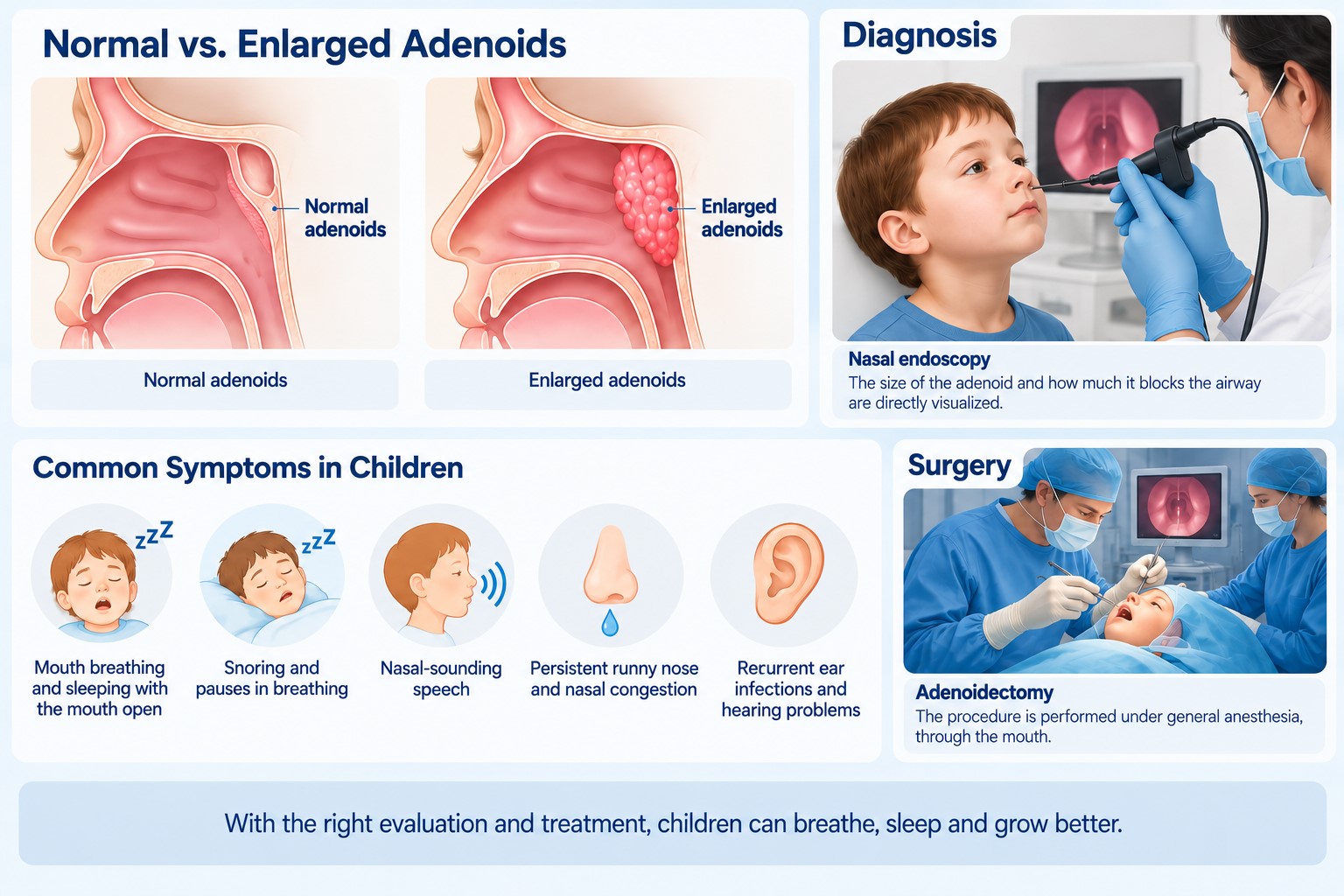
- Sleeping with the mouth open and daytime mouth-breathing
- Snoring and pauses in breathing during sleep (sleep apnea signs)
- Nasal-sounding speech and a stuffy-sounding voice
- Persistent runny nose and nasal congestion
- Recurrent middle ear infections and fluid buildup in the ear
- Reduced hearing and not responding when called
- Restless sleep, daytime fatigue, and poor concentration
The most commonly overlooked of these signs is reduced hearing. The child doesn't fail to respond because they are being disobedient, but because their hearing has diminished — which is often mistaken for inattentiveness.
Adenoid Enlargement in Adults
By adulthood, the adenoid has usually shrunk. For this reason, newly developed adenoid enlargement in an adult is an unusual finding and its cause needs to be thoroughly investigated. If accompanied by one-sided nasal congestion, ear fullness, or nosebleeds, an ENT evaluation shouldn't be delayed.
How Are Enlarged Adenoids Diagnosed?
Diagnosis is made through a comprehensive ENT (ear, nose, and throat) examination. The size of the tissue and how much of the airway it blocks are directly visualized with nasal endoscopy. This procedure, performed with a thin, flexible camera, takes only a few minutes and is easily tolerated by children.
A lateral neck X-ray may be used when necessary. If fluid buildup in the ear is suspected, tympanometry and a hearing test are added to the evaluation.
Do Enlarged Adenoids Shrink on Their Own?
In most children, yes. Adenoid tissue usually becomes smaller as a child grows and typically regresses during adolescence.
However, waiting isn't always the right medical choice. If the airway is significantly blocked, if the child struggles to breathe during sleep, or if there is persistent fluid buildup in the ear, waiting for the tissue to shrink won't prevent long-term complications. The decision for intervention is based on the severity of the symptoms, not solely on the physical size of the tissue.
When Is Adenoid Surgery Necessary?
Surgery is considered under specific clinical conditions:
- Pauses in breathing during sleep or obstructive sleep apnea
- Recurrent middle ear infections or persistent fluid buildup in the ear (glue ear)
- Reduced hearing leading to potential speech delay
- Persistent nasal congestion that doesn't respond to medical therapy
- Early negative effects on facial and jaw development
When symptoms are mild or related to conditions such as allergic rhinitis, medical treatment is tried first. Depending on the underlying cause, this may include nasal corticosteroid sprays, allergy treatment, or antibiotics for bacterial infections. Surgery is recommended when symptoms persist despite appropriate medical treatment.
How Is Adenoid Surgery (Adenoidectomy) Performed?
The procedure, called an adenoidectomy, is performed under general anesthesia, entirely through the mouth. There are no external incisions, leaving no scars on the face or neck.
An adenoidectomy itself is a short procedure, typically taking around 20–30 minutes. If the tonsils are also enlarged, a tonsillectomy can be performed during the same session. If fluid is present in the ear, tympanostomyl (ear) tube placement may also be added.
Patients are usually discharged on the same day or after a short overnight observation stay.
What Is Recovery Like After Adenoid Surgery?
A mild sore throat, temporary bad breath, and a low-grade fever may occur during the first few days post-surgery. Parents should closely follow the surgeon's postoperative instructions.
Children typically return to their normal activities within a week. Most parents notice immediate improvements in nasal breathing within the first few days, along with a significant reduction in snoring and improved sleep quality.
What Happens If Enlarged Adenoids Are Left Untreated?
Untreated enlarged adenoids can lead to chronic health issues beyond simple nasal congestion:
- Changes in facial development: Constant mouth breathing can lead to "adenoid facies," causing a narrow upper jaw and dental bite misalignments.
- Hearing and speech delays: Persistent middle-ear fluid reduces hearing clarity, potentially delaying speech and language acquisition.
- Growth and developmental delays: Chronic sleep-disordered breathing impairs deep sleep stages, which can negatively impact growth hormone secretion.
- Decline in academic performance: Restless sleep leads to daytime fatigue and reduced attention span at school.
Are Adenoids and Tonsils the Same Thing?
No. While both belong to the same lymphatic immune system, they are located in different areas. The tonsils sit on either side of the throat and are visible when opening the mouth. The adenoid sits higher up behind the nose and cannot be seen directly without specialized instruments.
Disclaimer: This content is for informational purposes only and should not replace professional medical advice, diagnosis, or treatment. Always consult your ENT specialist for personal medical guidance.
Frequently Asked Questions
There is no strict minimum age. The decision depends on symptom severity rather than age alone. If there are breathing pauses during sleep or fluid in the ears affecting hearing, surgery can safely be performed around ages 2–3 when medically indicated.
No. The adenoid is only a small part of the body's immune system, and other lymphoid tissues compensate for its removal. Research shows no long-term reduction in overall immunity following an adenoidectomy.
When performed alone, adenoidectomy causes minimal pain, usually described as a mild sore throat for a few days. If combined with a tonsillectomy, discomfort may last up to a week and requires mild pain management.
Regrowth is uncommon but possible, particularly in very young children (under age 2) or those with severe untreated allergies. Complete surgical removal minimizes this risk significantly.
Yes, mild to moderate cases associated with allergies or temporary inflammation can often be managed with nasal steroid sprays and antihistamines. Surgery is reserved for cases where medical therapy fails to restore proper breathing or hearing.
While rare, adult adenoid hypertrophy can happen due to chronic inflammation, smoking, or allergies. Any new onset of adult nasal obstruction or unilateral ear symptoms should be thoroughly evaluated by an ENT doctor.
Please contact Op. Dr. Ümit Küçüktepe for an examination and further information.